
🔌 For U.S. CBD brands, hemp companies, and product developers — you've decided to move away from disposables and build a reusable product line. Now comes the next big decision: 510-thread vape or pod system? This guide breaks down the pros, cons, and trade-offs of each format.
📖 A Real Choice
We had a client who initially wanted to go with 510 vapes for their brand because they believed the 510 format had strong market recognition and broad user adoption. However, they later discovered that their target users preferred a more minimalist design and ultimately chose a pod-system CBD vape device. This decision shaped their entire brand positioning.
Quick Overview: What Are They?
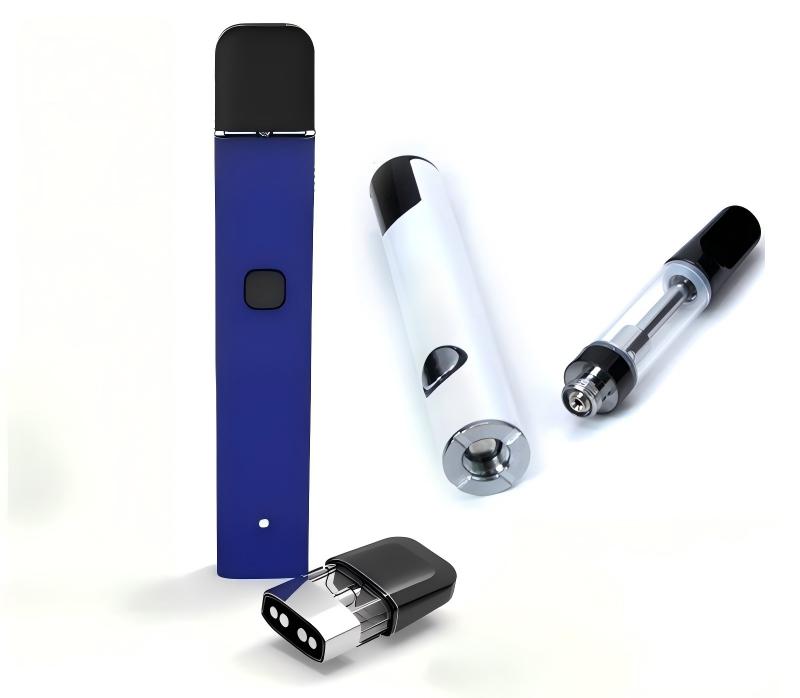
510 Thread: The industry standard for years. A universal threading system (7mm diameter, 0.5mm pitch) that connects a rechargeable battery to a replaceable cartridge. Almost any 510 cartridge works with any 510 battery.
Pod System: A newer format. A rechargeable battery with a proprietary connection (magnetic or snap-in) that accepts only specific pods — usually from the same brand. No universal standard.
Both formats are reusable on the battery side and disposable on the oil side — which is what works for CBD.
Comparison at a Glance
| Feature | 510 Thread | Pod System |
|---|---|---|
| Universal compatibility | ✅ Yes — works with any 510 battery | ❌ No — proprietary to your brand |
| Brand lock-in | ❌ Low — customers can use other brands' cartridges | ✅ High — customers must buy your pods |
| User experience | Requires screwing on/off | Snap or magnetic — no threading |
| Leakage risk | Moderate — depends on cartridge quality | Lower — pod systems often have better seals |
| Form factor | Usually round pen-style (long size) | Usually smaller, more pocket-friendly |
| Customization options | Limited — only round shapes and ceramic coil | Wide — more shapes, parameters |
| Upfront tooling cost | Low to moderate | Higher (proprietary pod design) |
| Best for... | Industry standard, wide compatibility | Brand lock-in, premium experience |
510 Thread vapes: Pros and Cons
✅ Pros
- Universal compatibility — Customers can use your cartridges with any 510 battery. Low barrier to entry.
- Proven and trusted — The industry standard for over a decade. Customers are familiar with it.
- Wide supplier base — Many factories produce 510 hardware. Easy to source and easy to switch.
- Lower tooling cost — Standard 510 cartridges use existing molds, requiring minimal upfront investment.
- Flexible form factors — Batteries come in single shapes: pen-style, box mod, palm-sized, etc.
- Easy for customers — Simple screw-on and screw-off. No learning curve.
❌ Cons
- Low brand lock-in — Customers can buy your cartridge and use it with any battery — including competitors' batteries. Harder to build loyalty.
- Threading can fail — Over-tightening or cross-threading can damage both the cartridge and the battery.
- Less premium feel — Some consumers view 510 as "standard" rather than "premium."
- Leakage around threads — Oil can seep into the threaded area, leaving a sticky residue and possibly causing the 510 battery to stop working.
Pod System: Pros and Cons
✅ Pros
- Strong brand lock-in — Customers must buy your pods. No compatibility with other brands. Built-in repeat purchases.
- Cleaner user experience — No threading. Snap or magnetic connection. Less mess, less frustration.
- More pocket-friendly — Pod systems are often smaller and more discreet than 510 pens.
- Better leak prevention — Pod systems typically have better seals, leaving less oil residue in pockets or bags.
- Premium perception — Pod systems feel more modern and premium to many consumers.
- Customizable pod design — You can design the pod's shape, color, and connection to match your brand.
❌ Cons
- Higher upfront cost — Proprietary pod molds cost $6,000–$10,000+.
- No universal standard — Your pods only work with your battery. Customers run out of battery; they can't use your pods.
- Higher MOQ — Proprietary pods often require higher minimum order quantities (5,000–10,000 units).
- Battery dependency — If your battery fails, customers are locked out of your entire product line.
- Limited supplier options — Once you commit to a pod design, switching factories is difficult.
Among the U.S. CBD brands we currently work with, about 60% start with 510 vapes, while 40% choose pod system CBD vapes. However, brands that opt for pod systems see an average customer repurchase rate that is 20% higher than that of brands using 510 vapes.
Which One Is Right for Your Brand?
The answer depends on your brand size, goals, and customer base.
Choose 510 Thread if...
- You're launching your first CBD vape product
- You have a limited budget for tooling
- You want to test the market before committing to proprietary hardware
- Your customers are already familiar with 510 (many CBD users are)
- You want maximum compatibility and the lowest barrier to entry
- Your MOQ is under 5,000 units
Choose Pod System if...
- You have an established brand with existing customers
- You want strong brand lock-in and repeat purchases
- You have a budget for proprietary tooling ($6,000–10,000+)
- You're ordering 5,000+ units
- You want a cleaner, more premium user experience
- You're willing to educate customers on a new format
📌 A Real Brand Case Study
We have a client — a mid-sized CBD vape brand with an established, loyal customer base. They chose a pod system, and although the upfront investment was higher, their repurchase rate increased by 25% within six months.
What About Oil Compatibility?
Both formats work with most CBD oil types — but there are differences:
- 510 cartridges — Wide range of coil options (ceramic, postless design). More flexibility for different oil viscosities.
- Pod systems — The ceramic coil is built into the pod. You choose the coil specification at design time. Less flexibility for future formulation changes, but more consistent performance with your specific CBD/TH oil.
If your oil formulation changes often, 510 offers more flexibility. If your oil is locked in, pod systems can be optimized perfectly for your specific viscosity.
What We Offer for Both Formats
We support both 510 and pod system development:
- 510 hardware: Standard 510 cartridges with ceramic coil options. Custom colors, logo printing, and packaging available.
- Pod systems: Proprietary pod development — custom pod shape, magnetic or snap-in connection, and coil specification tailored to your oil.
- Battery development: Both 510 batteries and pod system batteries can be customized with your logo, colors, and an LCD display (where applicable).
- Flexible MOQ: 510 from 100 pcs. Pod systems from 3,000–5,000 pcs (depending on complexity).
If you're a startup brand, starting with 510 vapes is the safer bet. Once you've built a solid customer base, consider pod systems to retain them. Don't go all-in on pods from day one — unless you have the budget and customer base to back it up.
🔌 Not Sure Which Format Is Right for You?
Tell us about your brand size, budget, oil formulation, and customer base. We'll help you evaluate whether a 510 or a pod system makes more sense for your situation.
📩 Talk to Our Team 🔍 View Our CBD HardwareFree consultation | Samples available | OEM/ODM both supported
Final Takeaway
Both 510 and pod systems have their place in the CBD vape market. 510 vape is the safe, flexible, low-cost entry point. Pod systems and CBD vape devices are for brands ready to invest in customer lock-in and a premium experience.
There's no wrong answer — only what fits your brand's stage, budget, and goals.
Questions about 510 vs pod for your specific situation? Reach out. We've helped dozens of U.S. CBD brands make this decision — and we'd love to help you as well.

